Begin with the Boundary, Not the Catalogue
Before choosing boards, establish where the fence is intended to go. An existing line can be a useful starting point, but it does not by itself settle a question about legal ownership or the exact boundary. If you are unsure, check your property documents and discuss the proposed work with your neighbour before installation. We can measure and plan the physical fence line once the position is agreed.
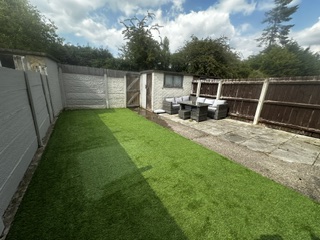
Next, look closely at the ground. A boundary may follow a slope, pass behind a shed, run beside paving or turn around a mature tree. Each detail influences post positions and how panels or boards meet. Mention any cables, drainage, planted beds or restricted access when requesting a quote.
A little planning now can prevent awkward gaps, a gate that opens the wrong way or a fence that is difficult to maintain later.
Featherboard and Closeboard Fencing
Featherboard fencing uses overlapping vertical boards to create a solid-looking boundary. It is often chosen for privacy and for its familiar timber appearance. The boards can be fitted as part of a constructed fence run, with supporting rails and posts designed for the span and conditions.
Closeboard is another name you may hear used for this type of overlapping-board fence. People sometimes use the terms differently, so the useful question is what components and construction method a quotation actually includes. Ask about the boards, rails, posts, gravel boards and finished height rather than relying on the style name alone.
Featherboard may suit a rear garden where screening matters, but a solid fence presents a larger surface to wind. Its support and post foundations therefore deserve careful thought, especially on an exposed boundary.
Panels provide a regular pattern and a defined width for each section. They can be a practical option when you want a neat, consistent run or need to replace an individual damaged section. Common designs include traditional overlap panels and framed, closeboard-style panels. The construction, thickness and finish vary by product, so two panels that look similar in a photograph may not perform or age in the same way.
When matching an existing fence, measure the space between posts and check the height carefully. An off-the-shelf panel will not solve a problem caused by a leaning post or a bay that has changed shape. We can assess the supports first, then advise whether to replace a panel, adjust the layout or renew the affected section.
Slatted, Picket and Decorative Options
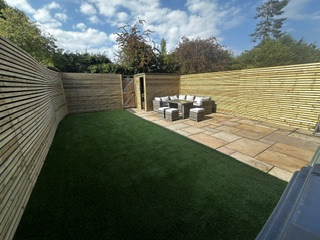
Some boundaries need definition without full screening. A picket fence can give a front garden a clear edge while keeping it visually open. Slatted timber fencing can create a contemporary look around a patio or seating space, with the spacing chosen to suit the desired level of privacy. Trellis can add a lighter upper section or support climbing plants where the overall arrangement is appropriate.
Each style brings practical considerations:
- Picket fencing: An open, traditional look for suitable front boundaries.
- Horizontal slats: A clean pattern that needs a well-planned frame.
- Vertical slats: A different rhythm that can work with modern gardens.
- Trellis: Partial screening and a place for planting to grow.
- Solid boards: Greater privacy, with support designed for their exposure.
We can talk through what you want to see through, what you want to hide and how much upkeep you are comfortable with before settling on a design.
Posts Make the Difference
The posts are easy to overlook once the fence is complete, yet they carry the load. A handsome new panel will still move if the post beside it is unsound. Timber posts can create a coordinated appearance with timber boards. Concrete posts are another option and are commonly paired with sectional panels and gravel boards. The right choice depends on the style, ground, exposure and look you want.
Post spacing must suit the chosen fence system. Depth and fixing method need to reflect the site rather than a single rule applied everywhere. Existing paving, roots and changes in level can make post placement less straightforward; we will discuss those issues when planning the installation.
Gravel Boards, Rails and Finishing Details
A gravel board sits at the foot of a fence and separates timber panels or boards from ground contact. Depending on the system, it may be timber or concrete. Rails support boards across a constructed timber fence; their number and arrangement must suit the height and style. Capping or a top finish can change the appearance of a fence and help give the line a tidy conclusion.
Ask for these details to be identified in your quotation:
- Fence style, approximate height and length.
- Post material and the scope of post replacement.
- Panel or board type and supporting rails.
- Gravel board material, where included.
- Removal and disposal of existing fencing.
- Any gate, hardware or finishing work.
A written specification helps you compare proposals fairly and understand what will be installed on the day.
Wind damage can be dramatic, but small signs often appear first: a panel that rattles, a post that shifts when pressed or a gate that no longer meets its latch. We look for the reason rather than covering the symptom. A single split panel between secure posts may be a manageable repair. Several leaning bays may call for a broader replacement plan.
If the fence is unstable, keep children and pets away from it and avoid pulling it upright yourself. Photographs of the complete run and the damaged area help us understand the issue before a visit. Tell us whether access is available from your side only and whether neighbouring structures are close to the fence.
Gates and the Daily Route Through Your Garden
A side gate is used too often to be an afterthought. Its width should suit bins, bikes or equipment that pass through regularly. Its opening direction should clear paths and steps, and the hinges and latch need suitable support. A timber gate can be designed to sit comfortably beside featherboard, panels or another fence style.
If your existing gate drags or refuses to latch, the frame, hardware or supporting post may need attention. We can assess whether a repair is practical or discuss a replacement made for the opening.
Garden Fencing Hoylake: Guide Prices
Panel fencing starts from £125 per section, based on a 1800mm × 1800mm timber panel with concrete posts, including removal and disposal of the old fence.
Picket fencing costs approximately £80 per linear metre, supplied and fitted.
Slatted fencing, bespoke gates and fence repairs are quoted individually to suit the dimensions, materials and work required.
These prices are rough guides, subject to a site survey. Access, ground conditions, fence height and the supporting structure can affect the final cost. Your quotation will confirm the specification, including any gravel boards and removal work.
Frequently Asked Questions
How much does garden fencing cost in Hoylake and Meols?
Standard panel fencing starts from £125 per section, while picket fencing is approximately £80 per linear metre supplied and fitted. Slatted designs and bespoke work are priced individually. We assess your boundary and confirm what is included before you agree to proceed.
How long does fencing installation take?
Panel fencing takes approximately one hour per section. A two-person team can typically install around 20 linear metres of picket fencing per day. Removal work, difficult access and ground conditions may extend these guide times. We provide an estimate for your particular installation.
Will you remove and dispose of the old fence?
Yes. Old-fence removal and disposal are included in our standard panel fencing guide price. For slatted fencing, gates and other work, your quotation will clearly confirm the removal and disposal included.
Can you repair a storm-damaged fence?
Yes. Where the remaining structure is sound, replacing a damaged panel, post or smaller section may be sufficient. We check the supports and surrounding fencing before recommending repairs or replacement. If the fence is unstable, keep children and pets clear until it has been assessed.
What fencing suits an exposed garden near the promenade?
We consider wind exposure, ground conditions, finished height, posts and fixings before recommending a system. Slatted fencing can offer a contemporary appearance, but gaps alone do not make a fence stormproof. Solid panels also need suitable support. No garden fence is guaranteed against every storm, so we plan the installation around the individual site.
Request a Fencing Quote in Hoylake or Meols
Whether you are planning a new garden boundary, replacing weathered timber or comparing post and panel styles, Merseyside Fencing can help. Send us your Hoylake or Meols postcode, photographs if you have them and a short description of what you want the fence to achieve. We will discuss the options and provide a free, no-obligation quotation for suitable fencing or repair work.