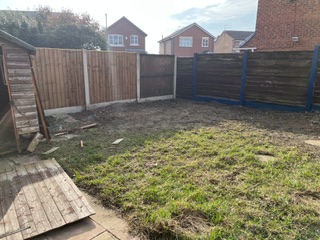
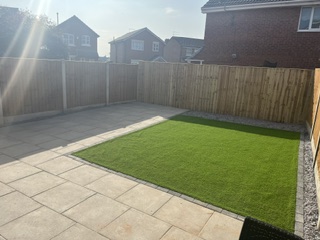
First: Identify the Real Problem
A broken board is visible; the cause may be less obvious. If a panel has come loose, check whether its posts are still firm. If the fence leans, look at the whole run rather than just the section that appears worst. A gate that drops may have worn hinges, an out-of-square frame or a shifting support post.
You can help us understand the job by sending:
- One photograph of the full fence line.
- Close views of damaged boards, posts or fixings.
- An approximate length and the number of affected sections.
- A note about access, slopes, paving or nearby planting.
- Your postcode and the result you would like.
There is no benefit in replacing a whole fence if the remaining structure is sound and a focused repair will do the job. Equally, fastening fresh panels to failing posts can cost more over time. We look at how many sections are affected, whether suitable replacement materials are available and how long the existing supports are likely to remain useful.
A partial replacement may work where one run has deteriorated but another remains straight and secure. For a fence with widespread movement, a planned replacement can give a more consistent appearance and avoid repeated callouts. We will explain what the proposed work includes, so you can make the decision with a clear picture of the cost and result.
Choose the Fence Around the Way You Live
A boundary should serve the garden you have. If you eat outside, you might want more screening beside the seating area. If children play near a side passage, a secure gate could matter more than a decorative top. If you enjoy the view across the front garden, a fully solid fence may feel too enclosed.
Common timber options include:
- Featherboard: Overlapping vertical boards for a traditional, private finish.
- Panel fencing: Defined sections with a consistent appearance.
- Picket fencing: An open style for appropriate front garden boundaries.
- Slatted fencing: A more contemporary pattern with spacing to consider.
- Trellis: A lighter feature that may suit planting and partial screening.
We can discuss what each style will look like at your property. The name of the fence is only part of the choice; the posts, supporting rails and fixing details matter too.
Think About the Parts You Do Not Notice
A good installation is built from the ground up. Posts must suit the fence system and the conditions where they will stand. A gravel board can help keep timber panels away from damp soil. On an uneven boundary, the change in height needs a deliberate solution so sections do not leave unwanted gaps.
Access is another practical issue. Materials may need carrying through a side passage, past a shed or across an established garden. Tell us what needs protecting and whether there is room to remove the old fence. We can discuss those details before agreeing how the work will be carried out.
If you are comparing quotations, ask whether they include posts, gravel boards, removal of the existing fence and waste disposal. Two prices may describe very different jobs.
A side gate often works harder than the rest of the boundary. It has to swing freely, clear the ground and latch properly every day. Its opening direction can affect how you move bins and bikes, while its height and board layout influence privacy.
We can repair a gate where its frame and supports remain suitable, or discuss a replacement that fits the actual opening. Do not assume a standard size will fit between older walls or posts. Measure carefully, consider the hardware and check that the supporting structure is sound before settling on the design.
What Happens During a Fencing Project?
- Discuss the issue. Tell us what is damaged or what you would like to change.
- Review the site. We check dimensions, access, ground levels and existing supports as needed.
- Agree the specification. Choose the style and confirm the materials and scope of removal.
- Install the fence. Set supports and complete the boards, panels or gate according to the agreed plan.
- Check the finish. Look at alignment, security and the way the gate operates.
Before changing a shared boundary, make sure you are satisfied about its position and ownership. If it is unclear, consult your property documents and discuss the proposed work with your neighbour. That conversation is easier before the old fence comes down.
Looking After Your New Boundary
Timber is an outdoor material and its appearance changes with weather. Keep soil and accumulated leaves away from the base where practical. Check hinges and latches occasionally, especially on a gate used several times a day. If a post begins to move or a fixing loosens, dealing with it early is usually simpler than waiting for another section to be affected.
Garden Fencing Moreton: Guide Prices
Panel fencing — from £125 per section. Based on a 1800mm × 1800mm timber panel with concrete posts, including removal and disposal of the old fence.
Picket fencing — approximately £80 per linear metre, supplied and fitted.
Cross-and-rail fencing and bespoke gates — individually quoted to suit your boundary, dimensions and chosen materials.
These are rough guide prices, subject to a site survey. Access, ground conditions and the specification can affect the final quotation.
Frequently Asked Questions
How long does fencing installation take?
Panel fencing takes approximately one hour per section. A two-person team can typically install around 20 linear metres of picket fencing per day. Ground conditions, access and removal work can affect these estimates.
Do you remove and dispose of the old fence?
Yes. Our panel fencing guide price includes old-fence removal and disposal. For other fencing styles and gates, we confirm removal costs in your quotation.
Can you repair my fence instead of replacing everything?
Yes. If the remaining fence is sound, replacing individual panels, posts or a damaged section may be sufficient. We assess the condition before recommending repairs or replacement.
What fencing suits an exposed garden in Moreton?
We consider wind exposure, fence height, ground conditions, posts and fixings before recommending a suitable system. No fence is guaranteed against every storm, so the supporting structure matters alongside the fencing style.
Can you supply and fit a matching garden gate?
Yes. We can quote for a bespoke timber gate to suit your opening and fencing, with suitable hinges, a latch and any agreed locking hardware.
Talk to Merseyside Fencing in Moreton
A new fence can make a garden feel complete, but the best result begins with a realistic assessment of the old one. Whether you need a panel replaced, a gate repaired or a whole new garden boundary in Moreton, tell us what is happening. Send a few photographs if possible, and we will discuss the options and provide a free, no-obligation quotation.