
Building Better Boundaries from the Ground Up.
We recently completed fence repairs, gate installations and a huge cross and rail, feather edged fence in Newton-le-Willows, Eccleston, Rainford and Haydock.
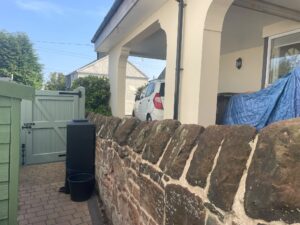
Before Tongue and Groove Fence Install in St Helens
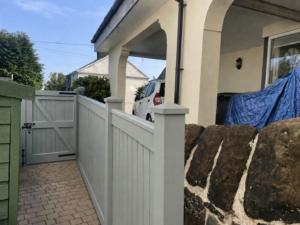
After Tongue and Groove Fence Installation in St Helens.
Case Study: Tongue and Groove Fencing to Match Existing Gates in St Helens
Two years after we installed new garden gates at this property, the customer asked us back to complete the boundary with matching tongue and groove fencing. The existing sandstone wall had plenty of character, so the aim was to add privacy while creating a consistent look between the fence and gates.
The Brief
The customer wanted fencing that would:
-
Match the gates we had previously installed in St Helens 2 years previously
-
Provide more privacy above the sandstone wall
-
Give the boundary a neat, continuous finish
-
Retain the wall as a visible feature
Planning the Installation
We looked at the style and finish of the existing gates before setting out the new fence. Matching the timberwork was central to the job: although the gates and fence were installed two years apart, they needed to look as though they belonged together.
We planned the fence line along the sandstone wall and checked how the new sections would meet the gates. The wall’s natural colour and texture provided an attractive base, so we designed the fencing to sit above it rather than conceal it.
Fitting the Tongue and Groove Boards in St Helens
We installed tongue and groove fencing along the wall to form a solid timber screen. The boards fit closely together, giving the boundary a clean appearance and reducing gaps that would otherwise affect privacy.
Throughout the installation, we checked the alignment of the boards and the overall line of the fence. We paid particular attention to the transition beside the existing gates, where differences in height or finish would be most noticeable.
The Finished Result in St Helens
The completed fencing gives the property a more private boundary and brings the wall and gates together visually. The sandstone remains an important part of the finished look, while the new timberwork provides the extra screening the customer wanted.
The result is:
-
A fence designed to complement the gates installed two years earlier
-
Greater privacy along the sandstone boundary
-
A tidy, consistent finish across the wall and gate area
-
A welcome second project for a returning customer
This installation shows how new fencing can be planned around earlier work, even when the projects are completed years apart.
A garden fence may appear to be a simple row of panels, but a dependable boundary is really a complete structure. Its strength comes from the posts, foundations, rails, fixings and gravel boards working together. If one part is unsuitable, the entire fence can become unstable long before the timber panels have reached the end of their useful life.
Merseyside Fencing provides garden fencing installation, replacement and repair services throughout St Helens. We work with homeowners who need anything from a single damaged post replacing to a complete redesign of an old garden boundary.
Every quotation begins with the garden itself. We consider the length and height of the proposed fence, the condition of the ground, access to the property, changes in level and the amount of exposure to wind. This allows us to recommend a fencing system that is appropriate for the location rather than treating every garden as though it were identical.
A Fence Is Only as Strong as Its Posts
Fence panels are the most visible part of the boundary, but the posts carry the load. They must hold the fence upright while resisting wind, movement and the gradual effects of wet ground.
Common causes of post failure include:
- Timber decay around ground level
- Foundations that are too shallow
- Insufficient support for heavy panels
- Poor-quality or weakened timber
- Repeated movement during windy weather
- Water collecting around the post
- Pressure from shrubs, trees or climbing plants
- Impact from vehicles or garden machinery
A post may look sound above ground while being badly deteriorated beneath the surface. When several panels begin leaning together, one failed post is often responsible. Identifying the actual point of failure can sometimes prevent unnecessary replacement of otherwise serviceable fencing.
Customers can choose between treated timber posts and concrete posts. Timber creates a consistent, natural appearance, while concrete does not rot and can make future panel replacement easier. The best option depends on appearance, budget, fence style and site conditions.
Understanding the Ground Beneath the Fence
Soil is rarely discussed when people choose fencing, yet it affects how posts should be installed. Soft, recently disturbed or persistently wet ground may require a different approach from firm, established soil. Old foundations, tree roots and buried rubble can also influence post positions.
Before beginning an installation, we consider:
- Whether the boundary ground is firm or disturbed
- Signs of standing water or poor drainage
- Existing concrete around old posts
- Nearby trees and substantial roots
- Changes in height along the fence line
- Retained soil on either side
- Paving, decking or artificial grass beside the boundary
- Any visible pipes, covers or services
A fence should not be expected to act as a retaining wall unless it has been designed for that purpose. Where ground levels differ significantly, a suitable retaining solution may be required independently of the fencing.
Creating Privacy in the Right Places
Complete privacy does not always require the same tall fence around the entire garden. It can be more effective to identify where screening is genuinely needed.
A household may want additional privacy around a patio, hot tub, conservatory or outdoor dining area while allowing more light into the rest of the garden. Combining solid fencing with trellis or slatted screening can prevent the space from feeling boxed in.
When planning a private garden, think about the view:
- From ground-floor windows
- From upstairs windows
- Towards adjoining properties
- From neighbouring paths or driveways
- Around seating and entertaining areas
- Near side passages and garden gates
Fence height is subject to planning rules, particularly beside a highway. Property owners should check the requirements when proposing a taller boundary or substantially altering a front garden fence.
Fencing Styles for Different St Helens Homes
St Helens includes compact terraces, established family homes, modern developments and larger properties around its more rural edges. The character of the building and garden can help determine which fence looks most appropriate.
Options include:
- Feather-edge fencing: A strong, traditional system constructed with overlapping vertical boards.
- Lap panels: A practical and economical choice for standard residential boundaries.
- Tongue-and-groove panels: Solid, closely fitted boards offering privacy and a substantial finish.
- Board-on-board fencing: Overlapping layers that create depth and limit visible gaps.
- Hit-and-miss fencing: Alternating boards that provide screening while allowing air to move through.
- Horizontal slatted fencing: A contemporary design suitable for modern gardens and patio areas.
- Picket fencing: An open, decorative choice for front gardens and internal boundaries.
- Trellis fencing: Useful for supporting climbing plants or introducing partial screening.
- Post-and-rail fencing: Well suited to large gardens and more open surroundings.
- Decorative framed panels: Available with lattice sections, shaped tops and ornamental details.
The strongest or most expensive panel is not automatically the best choice. The objective is to match the construction to the conditions and the customer’s priorities.
Dealing With Awkward Garden Boundaries
Not every boundary follows a convenient straight line. Gardens may taper, curve, change direction or become narrower towards the rear. Garages, sheds, walls and extensions can also interrupt the route.
A made-to-measure approach may be needed when:
- Standard panels do not fit the remaining space
- The boundary contains several corners
- Ground levels rise or fall sharply
- A gate must fit a non-standard opening
- Existing brickwork needs to be considered
- Access becomes restricted behind a building
- The fence must meet an existing wall neatly
- Small gaps would create a security problem
Custom-sized sections can produce a cleaner result than forcing standard panels into an unsuitable layout.
Garden Gates: The Moving Part of the Boundary
A garden gate receives more daily use than any fence panel. Every opening and closing places pressure on its hinges, posts and frame. A heavy gate attached to a weak post will eventually drop, no matter how good the gate itself may be.
A practical gate installation considers:
- The width needed for bins and bicycles
- Access for lawnmowers and equipment
- Inward or outward opening
- Ground clearance
- Suitable hinges and fixings
- Latch position
- Privacy requirements
- Security from the street
- Safe use around children and pets
Timber gates can be designed to match feather-edge, tongue-and-groove, picket or slatted fencing. Ledged-and-braced construction helps the gate retain its shape and reduces the risk of sagging.
Repairs After Wind and Storm Damage
Strong wind often exposes weaknesses that have been developing unnoticed. A panel may blow out because it is damaged, but the underlying problem could be a loose post or deteriorated gravel board.
Following storm damage, look for:
- Posts moving at ground level
- Cracked or detached panels
- Loose rails or boards
- Exposed nails and screws
- Leaning sections
- Gates that suddenly stop closing
- Broken concrete around post bases
- Gaps that allow pets to escape
Temporary supports may reduce movement briefly, but they are not a permanent repair. Damaged sections should be assessed before neighbouring panels are pulled out of alignment.
Where the fence remains generally sound, we may be able to replace individual posts, boards, rails or panels. Where decay is widespread, planned replacement may provide better long-term value.
Gravel Boards and the Vulnerable Bottom Edge
The bottom of a timber fence is especially vulnerable because it sits close to damp soil, leaves and vegetation. Gravel boards create separation between the wooden panel and the ground.
They can help:
- Reduce direct soil contact
- Protect the bottom edge of panels
- Create a level base beneath fencing
- Make individual panels easier to replace
- Close low-level gaps
- Accommodate minor changes in ground height
Timber gravel boards offer an all-wood appearance. Concrete gravel boards provide a longer-lasting barrier and work particularly well with concrete posts.
Avoiding Boundary Disagreements
Before replacing a shared fence, it is sensible to confirm who is responsible for the boundary and discuss the work with the neighbour. Title plans can be helpful, but the markings on a plan do not always settle every disagreement.
Useful steps include:
- Confirming the intended fence line
- Discussing access requirements
- Agreeing how existing plants will be handled
- Explaining temporary gaps during installation
- Checking which way gates will open
- Avoiding changes to a neighbour’s property
- Keeping written confirmation of any shared agreement
Good communication can prevent a straightforward fencing project from becoming an unnecessary dispute.
Fencing Installation Across St Helens
Merseyside Fencing serves communities throughout the St Helens area, including:
- St Helens town centre
- Eccleston
- Rainford
- Billinge
- Haydock
- Rainhill
- Sutton
- Thatto Heath
- Blackbrook
- Moss Bank
- Clock Face
- Newton-le-Willows
Whether the property has a compact yard, a conventional family garden or a long boundary overlooking open ground, we can recommend a suitable installation method.
Request a Garden Fencing Quotation
If your fence is leaning, repeatedly losing panels or no longer providing enough privacy, contact Merseyside Fencing to arrange a quotation.
To help us understand the job, provide:
- Your St Helens postcode
- Photographs of the boundary
- An approximate measurement
- The required fence height
- Details of any gate
- Known access difficulties
- Your preferred style
- Whether old fencing needs removing
A well-built fence begins below ground, not at the top of the panel. With correctly installed posts, suitable materials and careful planning, your new garden boundary can provide privacy, security and an attractive finish for many years.